In Madison Park, an Old Dock Stays Yours Until the Day You Actually Fix It
September 17, 2026
September 17, 2026
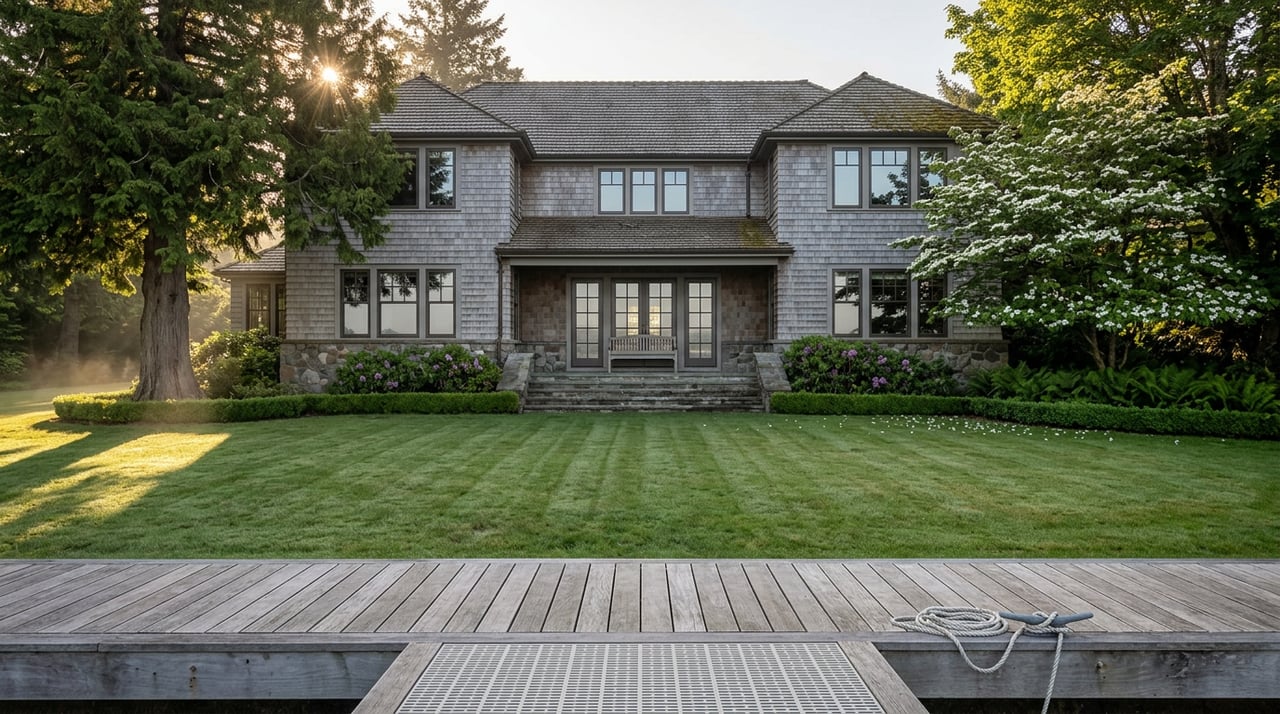
Ask most buyers what they think they own when they close on a Madison Park lakefront home with a private pier, and the answer is simple: the dock that's already there. It was built before they arrived, it's shown in the listing photos, and nobody mentioned a problem during showings. The assumption is that an existing structure is a fixed asset, grandfathered in and safe from the code that would never have allowed it new.
That assumption holds right up until someone actually needs to fix the thing. Seattle's shoreline code treats an old, nonconforming pier differently the moment real money goes into repairing it, and the trigger has nothing to do with whether the work is cosmetic. It has to do with what the repair costs relative to what the pier is worth.
Madison Park's shoreline sits inside Seattle city limits, which means it falls under Seattle Municipal Code 23.60A, not the county rule that governs unincorporated lakefronts a few miles away. The two systems start from opposite premises. Under King County's Shoreline Master Program, a private dock built solely for one house is not treated as an outright permitted use at all. Joint docks and shared moorage are the preferred solution, and a single-family pier is something county planners allow only when nothing else works.
Seattle takes the opposite starting position. The Shoreline Management Act identifies single-family residences as a priority use when built in a way that protects the shoreline environment, and Seattle's code follows that lead by treating a residential pier as a "normal appurtenance," a use so tied to living in the house that a lot of construction connected to it doesn't need a separate shoreline permit at all. On paper, a Madison Park homeowner has an easier path to a dock than a homeowner on an unincorporated county lake.
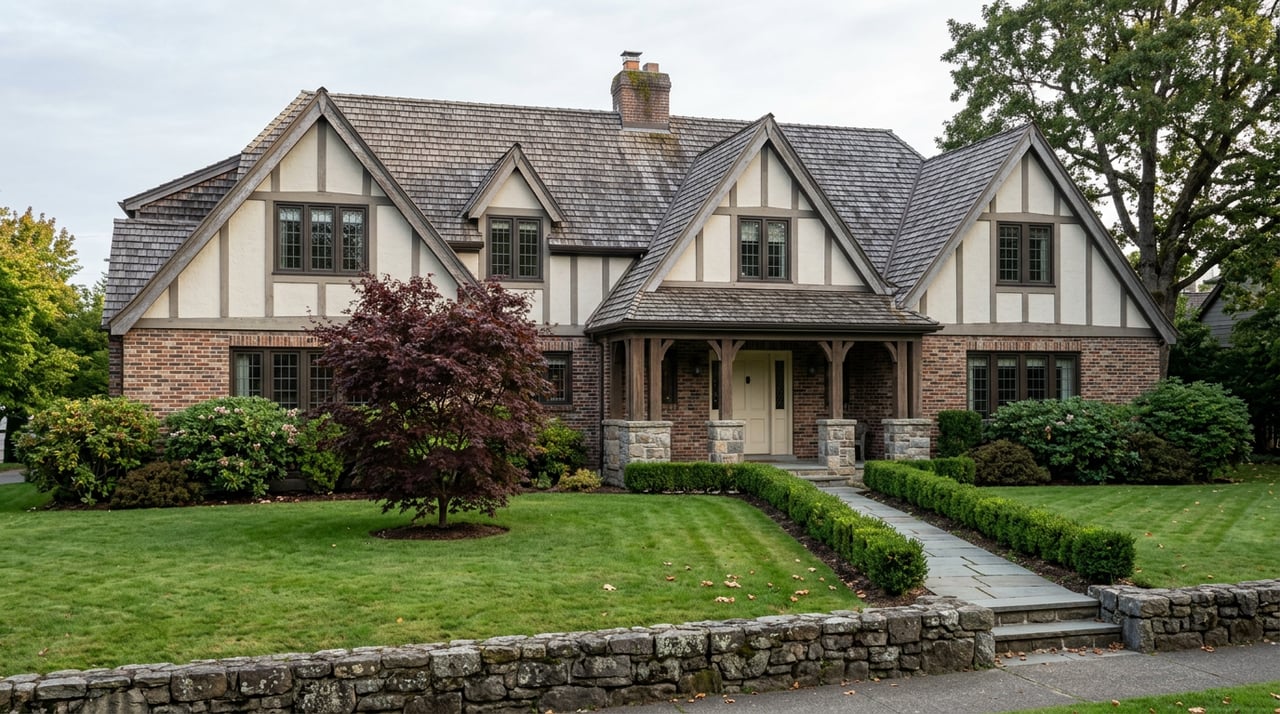
The catch shows up later, in how the code treats a structure that was legal when it was built but no longer matches the standards Seattle adopted since. Madison Park's housing stock runs from 1920s Craftsman homes to Tudor and Colonial Revival cottages, and a pier built to serve a house that old was almost certainly permitted under a much earlier version of the shoreline code. It can be fully legal and still fall outside today's dimensional standards, which is exactly what "nonconforming" means in practice.
Nonconforming does not mean untouchable. It means the structure can stay exactly as it is, doing exactly what it already does, for as long as nobody triggers a review. What triggers a review is spending real money on it.
When Seattle rewrote its Shoreline Master Program as part of the 2015 update, the city built in a specific mechanism for this situation. If work on a nonconforming pier rises to the level of substantial improvement, meaning the cost of the renovation in any five year period equals or exceeds 60 percent of the market value of the nonconforming portion of the structure, the owner has two options: bring the whole pier up to current standards, or cut its overwater coverage by 20 percent.
That is not a hypothetical clause sitting unused in a code book. A Seattle shoreline permit decision on file with the state's environmental review process shows exactly how this plays out on a real Lake Washington property. The applicant proposed reconfiguring an existing nonconforming residential pier, and the approved outcome reduced the structure from 1,305 square feet to 1,225 square feet, cut its length from roughly 165 feet to 152 feet, removed two finger piers, added a boat lift, and replaced solid decking with grated material to let light reach the water below. The project was approved because it reduced the pier's footprint and impact, not despite it.
That case sat in an Urban Residential and Conservancy Recreation shoreline environment on Lake Washington, one of the environment designations Seattle applies along its lakefront. The same chapter of city code, 23.60A, governs every private pier on Lake Washington within Seattle city limits, Madison Park included, and the same substantial improvement mechanism applies whenever a pier there needs more than routine upkeep.
A buyer touring a lakefront listing sees a dock and a price. What they don't see, unless they ask, is when that dock was last substantially modified and how close its current condition sits to needing real work. A pier with soft decking, aging pilings, or a boat lift that's failed inspection isn't just a maintenance line item. It's a structure whose next major repair could be the one that forces a 20 percent reduction in the very thing the buyer priced into the offer.
This is a different kind of surprise than a failed home inspection. A standard inspector checks whether the deck boards are rotting. Nobody on that inspection is checking whether the pier's footprint survives contact with Seattle's substantial improvement threshold. That determination depends on permit history, not visual condition, and permit history is not something a buyer's agent pulls automatically unless someone asks for it.
Federal and state review still layers on top of all of this. Any construction below the ordinary high water mark on Lake Washington typically needs a Hydraulic Project Approval from the Washington Department of Fish and Wildlife, and the U.S. Army Corps of Engineers reviews docks, floats, and moorage piling through its own permitting process, sometimes through an expedited Regional General Permit track designed for qualifying projects. None of that changes the city-level calculation. It adds time to it.
The price data for Madison Park waterfront makes the dock question easy to overlook, because the headline numbers point in different directions depending on which slice you're reading. Active waterfront listings in Madison Park carried a median list price of $1.3 million across 16 properties as of April 2026, according to Redfin, a figure that blends a $350,000 studio at Lakeview Lanai with buildable lots in the gated Madison Estates community priced near $1.7 million to $2 million and finished homes elsewhere on the shoreline listing well above $4 million. Meanwhile the neighborhood's overall median sale price, covering every closed transaction rather than just active waterfront listings, sat at $2,196,750 as of July 2026, up 14.7 percent year over year. Zillow's home value index for the neighborhood told a third story, showing the average home value at $1,811,269 as of June 2026, down half a percent over the prior year.
Three numbers, three different pictures, and none of them tell a buyer what a single-family lakefront home with a functioning, code-compliant dock actually costs to carry. The waterfront median looks low in part because it blends deeded condo slips with gated estate lots and finished multimillion dollar homes into one figure. A dock's compliance status, its age, and how close it sits to that 60 percent threshold are part of what separates a home that trades near the median from one that costs meaningfully more to actually own.
A few questions are worth asking before earnest money changes hands on any Madison Park property with a private pier or dock.
None of these questions show up on a standard inspection report. They show up when someone with local, code-specific knowledge asks them before the transaction closes, not after.
A Madison Park dock is part of what you're buying, but it isn't a fixed quantity. Its condition today and its permit history together determine what you're actually allowed to keep it as. Getting that answer before you write an offer, rather than the year you need a new boat lift, is the difference between planning for a repair and discovering a reduction.
If you're weighing a Madison Park waterfront purchase or preparing one to list, James Campbell can walk through what a specific dock's history means for your timeline and your offer strategy before you're under contract.
Stay up to date on the latest real estate trends.



Real estate, for me, is about obsessive and detailed customer service. Customer service is not just a strength of mine, it is my professional and personal North star. Whether you’re looking for your first, next, or moving from your current home, I look forward to helping you on your home buying or selling journey.