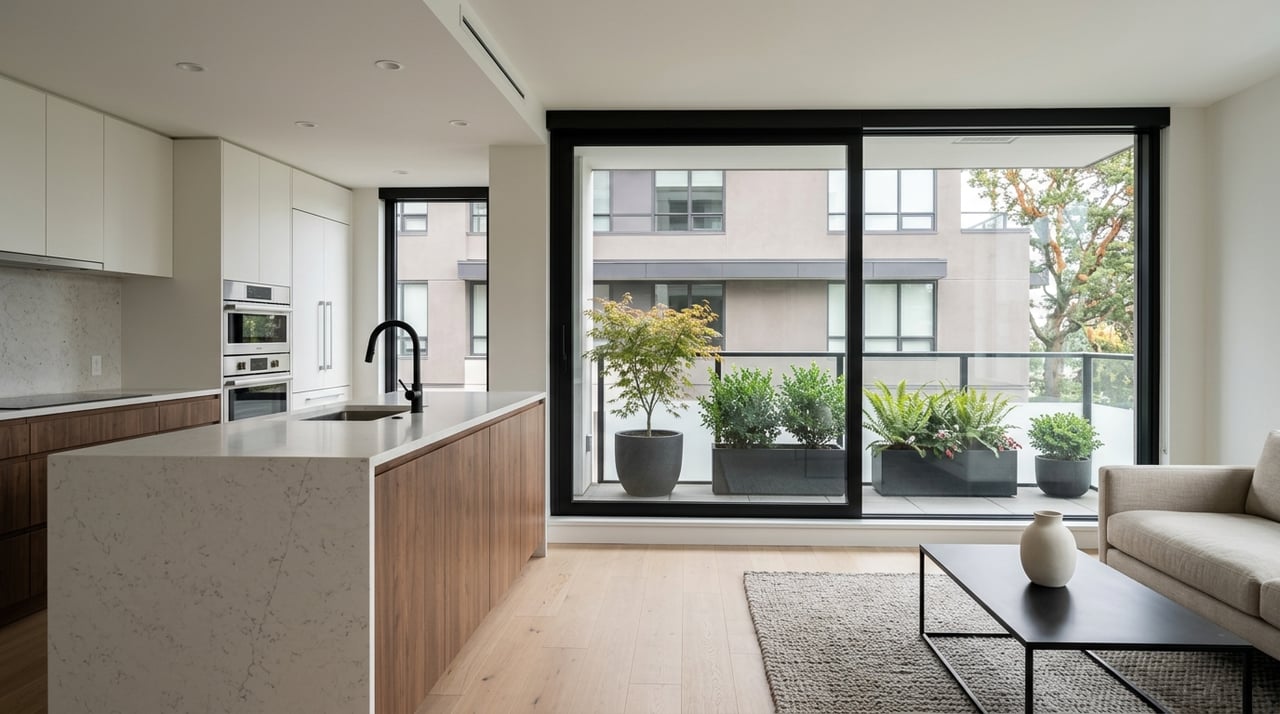
Madison Park Condo Buying Tips Every Buyer Should Know
May 7, 2026
May 7, 2026
Wondering if buying a condo in Madison Park is the right move for you? If you are drawn to Lake Washington views, a walkable neighborhood core, and a lower-maintenance lifestyle, Madison Park can be a compelling place to focus your search. The key is knowing how this niche condo market works, what older buildings may require, and how to review HOA documents with care. Let’s dive in.
Madison Park is a lakeside Seattle neighborhood centered on a public park and beach on Lake Washington. Seattle Parks describes Madison Park as having a 400-foot beach, bathhouse, tennis courts, and nearby shops and restaurants, which helps explain why the area draws buyers who want both neighborhood convenience and water access.
The condo market here is relatively limited compared with larger Seattle submarkets. A Seattle historic report describes Madison Park as mostly single-family homes with a mix of waterfront condominiums, and current search pages show a modest number of active condo listings. Realtor.com's April 2026 neighborhood snapshot shows 29 homes for sale overall, with a median listing price of about $730,000 and a median 47 days on market.
For you as a buyer, that usually means selection can be tighter than expected. If you want a specific combination of view, parking, outdoor space, and updated interiors, patience and preparation matter.
Madison Park condos span a fairly wide range of sizes. Current listings show compact studios and one-bedroom homes around 327 to 694 square feet, many two-bedroom layouts around 869 to 1,025 square feet, and larger homes from roughly 1,652 to 2,134 square feet and above.
That range also shows up in pricing. Current examples run from roughly the mid-$300,000s for smaller units to the low-$2 million range for larger waterfront homes.
This is not a one-size-fits-all condo market. You may see everything from a smaller, simpler residence to a larger view property with a more luxury-leaning amenity package.
One of the biggest things to understand about Madison Park condos is the age of the building stock. Current examples run from 1959 through 1980, with many listings from the 1960s and 1970s.
That does not automatically mean a problem. It does mean you should expect more variation in renovation quality, system updates, and long-term capital needs than you might find in newer construction.
In practical terms, two condos with similar square footage can offer very different ownership experiences. One building may have completed major work and maintained healthy reserves, while another may still be planning for future repairs.
Madison Park condo living is often closely tied to building amenities. Current listings mention features such as pools, private docks or lake access, fitness facilities, secure parking, storage lockers, on-site managers or concierge service, roof decks, in-unit laundry, and EV charging.
Examples in current listings include Canterbury Shores with a pool, dock, fitness facility, and gathering spaces; Lakeshore West with parking, storage, a fitness facility, and a private dock; and Washington Park Tower with a 24-hour concierge, roof deck, pool, dock, storage, and EV charging.
Monthly HOA dues vary widely. Recent listing examples show dues around $532 per month in one 1964 waterfront building, $807 per month in a recent sale where dues included heat, basic cable, water, sewer, and garbage, $944 per month at Lakeshore West, and $2,100 per month at Washington Park Tower.
The monthly number matters, but it is only part of the picture. A lower HOA fee is not always better if the building is underfunded, and a higher fee may make more sense if it covers major utilities, staffing, insurance, or significant amenities.
As you compare buildings, ask these questions:
In Madison Park, where many buildings are older and some are amenity-rich, these questions can have a major impact on your monthly budget and long-term cost of ownership.
In Washington, condo due diligence is not just about the unit. You are also evaluating the association. One of the most important documents in that process is the resale certificate.
Under RCW 64.90.640, the resale certificate should disclose key details about the association's financial and legal condition, along with restrictions tied to ownership. This can include assessments, delinquencies, special assessments, anticipated repairs over 5% of the annual budget, reserve-study status, financial statements, insurance, litigation, and code or violation issues.
It should also disclose rules that may affect how you use the property. That includes lease and rental restrictions, age-related occupancy restrictions, EV charging rules, governing documents, and recent board minutes.
When you review condo documents, try to focus on the issues most likely to affect your ownership experience and future costs. In an older Madison Park building, that means looking beyond finishes and staging.
Pay close attention to:
Washington law also sets timing rules around the resale certificate. The association must furnish it within 10 days after request, may charge up to $275 to prepare it, and may charge up to $100 to update it within six months. Because buyer cancellation and closing timing can be tied to delivery of the certificate, it is smart to request documents early and leave enough time to review them before waiving protections.
Reserve studies are especially important in Madison Park because many condo buildings are older. Under Washington law, reserve studies should estimate major maintenance, repair, and replacement costs that are too infrequent or significant for the annual operating budget.
The study must identify reserve components such as roofing, painting, paving, decks, siding, plumbing, and windows. It must also estimate useful life, remaining useful life, and current replacement cost.
For you, this is one of the best tools for spotting future financial risk. If the building has large upcoming projects and limited reserves, you may face higher dues or a special assessment later.
A condo inspection is still important, even though you are not buying a detached house. The inspection helps you evaluate the condition of the unit itself, while the HOA documents help you understand the building as a whole.
For older Madison Park buildings, the most important questions often involve the roof, siding, decks, windows, plumbing, parking configuration, dock access, and whether the HOA has enough reserves to fund near-term work. That approach lines up with what Washington reserve-study law requires associations to track.
A practical strategy is to think of your due diligence in two layers:
When those two pieces are reviewed together, you get a much clearer view of the real cost and risk of ownership.
If you plan to finance your Madison Park condo purchase, make project eligibility part of your early review. Not every condo building will fit every loan program.
For example, HUD says condominium projects must meet approval requirements that can include insurance coverage, financial condition, title issues, pending legal action or physical condition, and owner-occupancy percentage. That means a unit you love may not automatically qualify for FHA financing.
If financing is part of your plan, it helps to confirm building eligibility as early as possible. This can save time and reduce the risk of moving too far down the road on a home that does not fit your loan program.
Madison Park may be a strong fit if you want a lower-maintenance lifestyle near Lake Washington, the beach, and a walkable neighborhood core. The area can appeal to buyers who value views, location, waterfront character, and amenity-driven living.
It may be less ideal if your top priority is brand-new systems, minimal HOA governance, or very low monthly dues. Because the local condo stock is older and often more specialized, your experience here may look different from buying in a newer Seattle condo community.
That is why a clear plan matters. If you know your priorities on budget, condition, amenities, and loan type, you can narrow the search faster and avoid surprises.
In a niche market like Madison Park, good buying decisions usually come down to preparation. You want to compare buildings carefully, review HOA health with discipline, and understand how dues, reserves, amenities, and location all work together.
This is where detailed guidance can make a real difference. A thoughtful process can help you move quickly when the right condo appears, while still protecting your time, money, and peace of mind.
If you are considering a condo in Madison Park, James Campbell Real Estate Broker offers a service-forward, detail-oriented approach to buyer representation across Seattle and the Eastside, with the local guidance and coordination needed to evaluate both the home and the building with confidence.
Stay up to date on the latest real estate trends.


Real estate, for me, is about obsessive and detailed customer service. Customer service is not just a strength of mine, it is my professional and personal North star. Whether you’re looking for your first, next, or moving from your current home, I look forward to helping you on your home buying or selling journey.